TROPICAL PAVILION

Buy tickets

Discover the new Tropical Pavilion at Océanopolis in Brest. It opens on Saturday July 4, 2026, offering the opportunity to dive into tropical marine biodiversity, explore coral reefs and enjoy a unique, immersive experience.

The Tropical Pavilion

Get ready for a unique sensory experience in Océanopolis’s new Tropical Pavilion. Following a complete transformation, this iconic pavilion invites you to explore the extraordinary breadth of tropical marine ecosystems through a totally reimagined journey. From shimmering coral reefs to the mysterious depths of the Pacific, embark on an immersive voyage where science, amazement and discovery combine to reveal the secrets of tropical marine biodiversity.


Discover tropical marine ecosystems

The Tropical Pavilion at Océanopolis is one of the three signature pavilions of France’s national centre for scientific culture dedicated to the oceans. Highly acclaimed since its opening in 2000 for its vibrant colours and the beauty of its species, it has undergone a complete transformation to offer a more sensory and spectacular experience of the Pacific Ocean and tropical ecosystems.

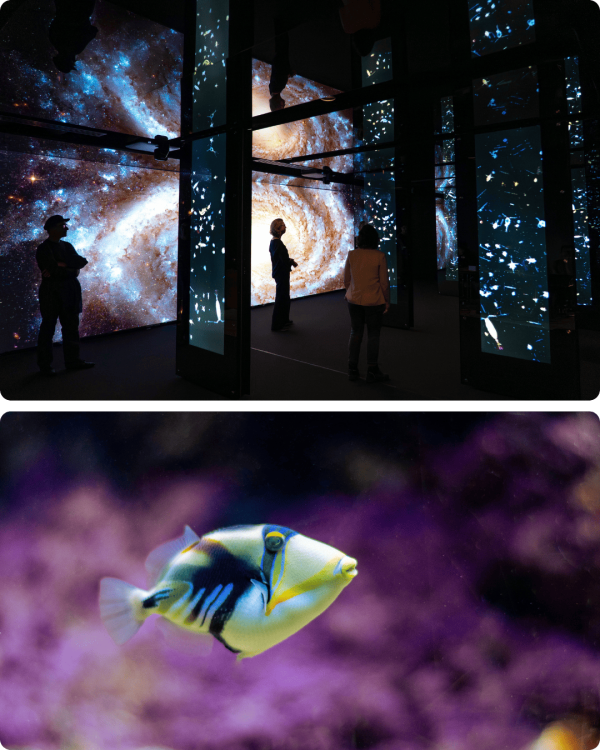
The pavilion is unique in France and transports visitors to the heart of warm tropical waters, where corals build reefs that harbour exceptional biodiversity. From shallow lagoons and deep, mysterious mesophotic reefs to impressive reef cliffs teeming with sharks, each area reveals the complexity and fragility of these marine ecosystems.


Why these renovations?

The transformation of the Tropical Pavilion is part of Océanopolis’s ambitious Metamorphosis project, led by Brest city council. This major renovation programme addresses several key challenges:

  • Updating scientific knowledge

The key themes of the Tropical Pavilion are more than ever at the heart of current scientific concerns. Coral is a genuine cornerstone of tropical regions and provides a way to address critical issues linked to climate change, particularly the warming of the seas that causes coral bleaching.

  • Modernising the visitor experience

The new exhibition design takes a multisensory and immersive approach, incorporating multimedia shows, innovative interactive displays and unique vantage points overlooking the aquariums.

  • Raising awareness of environmental threats

Sharks and rays are increasingly under threat in tropical regions but are essential for ecosystem regulation. The pavilion draws attention to these fascinating species, moving beyond stereotypes to reveal their crucial role in maintaining the marine equilibrium.


 

A glimpse of what you will discover in the new Tropical Pavilion

The lagoon

This pool is visible from above and allows visitors to observe:

  • Coral colonies
  • Several dozen giant clams, impressive not only for their size but also their vibrant colours
  • A wide variety of tropical fish

The experience is enriched by an audio narrative created by David Wahl, artist in residence at Océanopolis. This tale explores the mysterious palolo worm and the deep cultural ties it shares with the peoples of the Pacific.

Reef cliff

Dive into an evocative soundscape and discover a spectacular curved panoramic window offering one of the most impressive experiences in the entire Océanopolis tour. A new walkway also allows visitors to admire the tank from a commanding vantage point.

Standing 5.80 metres high and 4.88 metres long, this glass wall spans more than 28m² and is the largest pane of glass in all of Océanopolis’s pavilions.

The revamped design allows visitors to view this iconic aquarium in a new light. The interior has also been completely reimagined. The tank has been drained to make way for new, monumental structures within which animals will move.

To maintain a faithful representation of Indo-Pacific ecosystems, the aquarium is host to a new population of sharks and rays.

Shoal life

This new cylindrical aquarium, measuring 3 metres in both diameter and height, offers a spectacular immersive experience of the sandy seabeds found at the foot of coral reefs. Here, you can observe fascinating collective behaviour among species rarely seen in aquariums:

  • A colony of more than 200 garden eels (Heteroconger hassi)
  • Shoals of razorfish (Aeoliscus strigatus)
  • Brightly coloured corals (Tubastrea spp.) as well as colonies of black coral (Cirrhipathes spiralis),
  • Several hundred Waite’s splitfins (Luzonichthys waitei)

With its subdued lighting, this space evokes mesophotic reefs, ecosystems which are found at depths of 40 to 200 metres. These deep reefs have long been difficult to access and remain relatively little-known to scientists even today.

An experiential tour of tropical ecosystems

The visit to the Tropical Pavilion is punctuated by numerous interactive and sensory mediation devices such as:

  • Sensory exploration of sharks

A massive 6 metre display case showcases a precious collection, including a reconstruction of a megalodon jaw measuring more than 2 metres. Nearby, explore a tactile shark model and discover their incredible adaptations through touch.

  • French Guianan scientific carbet

Immerse yourself in the atmosphere of a Caribbean-Guianan rainforest. Sounds, scents, humidity: all of your senses will be called on. Discover the work of CNRS scientists through immersive installations and biodiversity recordings captured in French Guiana.

BEHIND THE SCENES IN THE TROPICAL PAVILION

Go behind the scenes of the Tropical Pavilion’s transformation through this series of videos: design, scientific issues and immersion have been central to the project.

Metamorphosis – The tricky transfer of corals

What the shark tank looks right now

Metamorphosis – Behind the scenes in the Tropical Pavilion

Metamorphosis – Corals in the Tropical Pavilion column


Environmental issues

Océanopolis’s new Tropical Pavilion puts environmental challenges at the centre of its scientific focus:

  • Coral bleaching

Coral reefs are genuine oases of biodiversity but are bearing the full brunt of global warming. The pavilion explains the phenomenon of bleaching and the vital importance of these ecosystems for the equilibrium of our oceans.

  • Protection of endangered species

Sharks, rays and giant clams: many tropical species are in danger. The pavilion raises awareness of their crucial ecological role and the conservation actions required.

  • Mesophotic reefs as potential refuges

These deep-water ecosystems have long been overlooked, but could serve as refuges for coral species faced with global warming. Studying them is essential to understanding how life adapts.

  • The land-sea continuum

The new exhibition design highlights the connections between terrestrial and marine environments, particularly through the space dedicated to the French Guiana rainforest and its links to the ocean.


Practical information for your visit to the Tropical Pavilion

Opening: Saturday July 4 2026.

Recommended visit time: 1.5 to 2 hours.

Accessibility: The pavilion is fully accessible to people with disabilities and those with reduced mobility.

Temperature: this visitor area is maintained at a temperature of approximately 25°C, with high humidity in certain sections, particularly the tropical greenhouse.